Professional Knowledge
"Members apply professional knowledge and experience to promote student learning. They use appropriate pedagogy, assessment and evaluation, resources and technology in planning for and responding to the needs of individual students and learning communities. Members refine their professional practice through ongoing inquiry, dialogue and reflection.." ~ https://www.oct.ca/public/professional-standards/standards-of-practice
Blending Knowledge
My life has been a journey of learning. Starting with my undergraduate degree, and then building a small business in outdoor education and team building. I was, at the time, a nationally ranked orienteer, and this experience was also full of learning. I then became a coach of the national junior orienteering team and the team leader of the Canadian junior team. As so many of these roles were rooted in teaching, I decided to go back to school to get my Bachelor of Education. So began an ongoing journey of deepening my knowledge and understanding. From MLLs with trauma, to achieving my specialists in Special Education AQs, a good deal of my interest and onging learning has been rooted in supporting Tier 2 and Tier 3 students, along with those in Tier 1 with mental health challenges. I didn't feel my knowledge for those with mental health challenges met the needs of the students I was supporting though. As such, I finished a rigourous Masters in Counselling Psychology to better meet the needs of the growing concern of mental wellness in schools.
Creating Mental Health Literacy Through the Arts
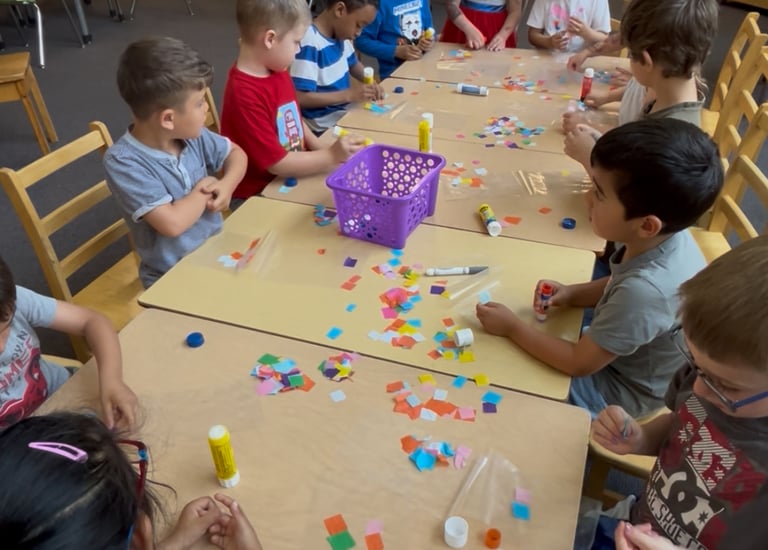
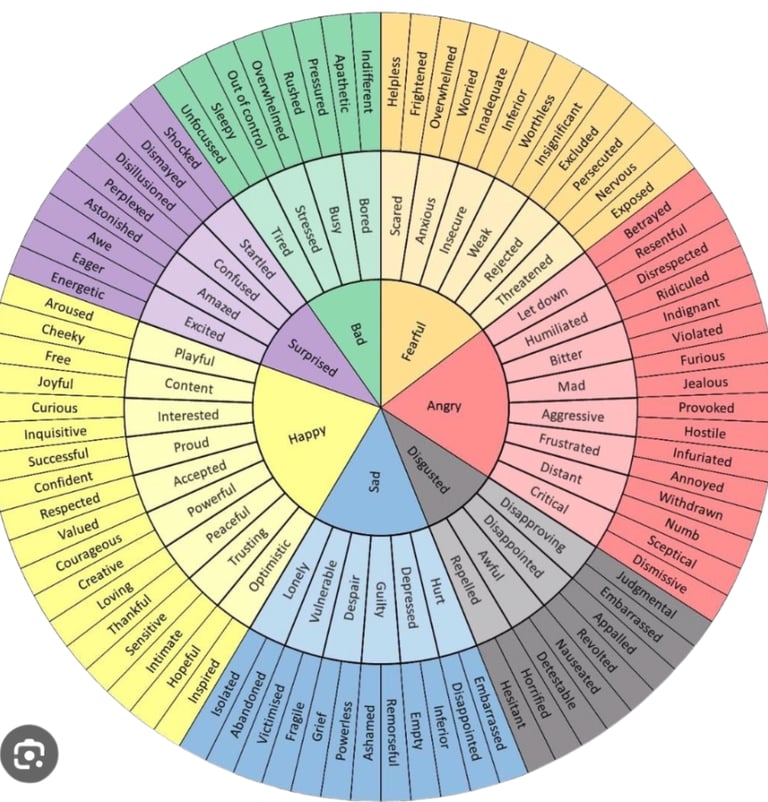
As a member of the Ontario College of Teachers, I am dedicated to fostering equitable, respectful, and inclusive learning environments. I strive to make every lesson accessible, ensuring that all students—regardless of background, ability, or experience—can engage meaningfully in their learning. In my arts-based teaching, I intentionally create safe spaces where students feel empowered to take risks, explore their creativity, and express themselves authentically. I embrace the diverse ways students communicate through art, and I design differentiated experiences that honour individual strengths while supporting growth. By embedding accessibility, wellness, and creativity into my practice, I aim to nurture students as confident, contributing learners. In ART and MUSIC, students use the emotion wheel to describe how different artistic pieces make them feel. In DRAMA, we explore the emotion wheel to learn how more descriptive words help us as actors get into character.


Every Student Should Have a Trusting Adult at School (HWDSB)
I have wide ranging teaching experience with my time with HWDSB. I have taught at eight schools in 14 varied roles. To contribute well, and to feel prepared, it has been necessary to continually further my learning. Whether it was EMPOWER learning and ongoing continuing education for that intervention, PD for standardized testing, reaching out to teacher support groups for resources and collaboration, or additional qualification courses, my plan is that when I foresee the need for new knowledge, I seek it out. This has occurred within professional learning committees (Mental Health Team, Dr. Davey, EQAO - What is a level 3? Math Initiative- Dr. Davey, Culturally Relevant & Responsive Pedagogy Team - Lawfield, IEP writing seminar, Lawfield, KTEA assessment training, Lawfield)
Responding to Student Needs
Students in grades 1,2, & 3 in Music, in grades 3, 4/5, & 6/7 in Drama, and in grade 1 in Visual Arts explore the colour wheel.
In Visual Arts & Music, they are encouraged to use stronger language to describe the emotions they feel when working on art pieces or listening to music. In drama, they are learning the varied emotions found in each section and are investigating how they are different from one another.
Recognizing that our school was lagging in this intiative, I have since tried to go above and beyond in creating trusting care for students outside of the classroom. In aligning with this HWDSB goal, in my role of LRT from 2018-2022, I created safe spaces for students to come during my lunch period, and during some prep times if they needed mental health support. I created the sticky-note strategy for students who felt opening up to be too invasive. I would be passed sticky notes every day in the hallway. I opened conversations with these students about who their trusted adult might be, along with understanding their symptoms, and communication skills.


Mental Wellness Literacy
Contact
Nina Waddington
© 2026. Nina Waddington All rights reserved.
Hamilton-Wentworth District School Board acknowledges our presence on ancestral Anishinaabe and Haudenosaunee Confederacy land as determined by the Dish with One Spoon treaty. The intent of this agreement is for all nations sharing this territory to do so responsibly, respectfully and sustainably in perpetuity. We respect the longstanding relationships with the local Indigenous communities, the Mississaugas of the Credit First Nation and the Six Nations of the Grand River.
LGBTQI2SA+ Safe Space
Lawfield Elementary School
Learning Commons/Prep Coverage ARTS gd 1-7

